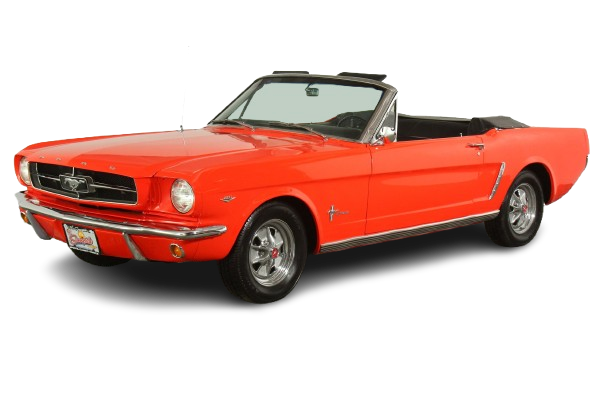

If the 1960s were a movie, the Ford Mustang would’ve had top billing.
In the spring of 1964, something special rolled off the assembly line. It wasn’t just a car—it was a revolution wrapped in steel and chrome, with a galloping horse on the grille and a price tag just shy of $2,400. It looked fast sitting still, and once it hit the road, America would never be the same.
That car, of course, was the Ford Mustang.
To truly appreciate the Mustang’s magic, you have to picture the world it was born into. America was strutting into the '60s with confidence. Rock ‘n’ roll was blaring from transistor radios, kids were twisting on American Bandstand, and the Baby Boomers were ready to take the wheel—literally. They didn’t want their parents’ cars. They wanted something with soul, style, and a bit of rebellious streak.
Enter Lee Iacocca, a rising star at Ford who sensed that change in the air. He envisioned a sporty, affordable car that would speak to the youth of America—a car that felt more James Dean than June Cleaver. Something bold. Something different.
What he pitched was a “sporty compact” that would break away from Detroit’s boxy big iron. What he delivered was the Mustang.
Built on the humble frame of the Ford Falcon, the Mustang got a bold new body: long hood, short rear deck, sleek lines, bucket seats, floor-mounted shifter, and just enough chrome to catch the sun as it roared by. It was attitude on wheels.
And when Ford unveiled it at the 1964 New York World’s Fair? The world went wild.
Showrooms were flooded. Customers camped outside dealerships. Ford had expected to sell 100,000 Mustangs that first year—they hit that number in three months. By year’s end, over 400,000 Mustangs were on the road. It was more than a sales success—it was a full-blown cultural event.
This wasn’t just about buying a car. This was about claiming freedom. Owning a Mustang meant something. It meant you were going places—and looking good doing it.
🎬 The Mustang Goes Hollywood
Not long after it hit the streets, the Mustang took its next natural step: the big screen. And it didn’t just show up—it stole the show.
In 1968, Steve McQueen strapped into a Highland Green Mustang GT 390 Fastback in Bullitt, and together they tore through the streets of San Francisco in what’s still one of the most iconic car chases ever filmed. No CGI. No fancy edits. Just raw V8 power, squealing tires, and movie magic.
That scene didn’t just make McQueen a legend—it made the Mustang a Hollywood star.
From Gone in 60 Seconds to Goldfinger, from John Wick to Drive, the Mustang became a favorite of stunt drivers, directors, and anyone who wanted their ride to ooze cool. It even had a cameo in the original Knight Rider pilot before KITT went full Pontiac.
🎸 Rock 'n' Roll on Four Wheels
While it was burning rubber on-screen, the Mustang was also rolling through speakers.
Wilson Pickett gave us “Mustang Sally” in 1966—a funky, irresistible tune that’s still playing at backyard barbecues and classic car shows across America. Meanwhile, the Beach Boys sang about the thrill of souped-up engines, and even The Boss himself, Bruce Springsteen, nodded to Mustangs as symbols of the open road and unchained youth.
The Mustang wasn’t just a car—it was a muse.
🛣️ Symbol of Rebellion and the American Dream
What made the Mustang so magnetic to car buyers, filmmakers, and musicians alike?
It stood for something. It wasn’t a status symbol—it was a freedom machine. It didn’t matter if you were a high school senior or a middle-aged dad—when you slid behind the wheel of a Mustang, you felt young, alive, and free.
It let the everyman feel like Steve McQueen without Cadillac money. It gave families a bit of flair in the driveway and gave dreamers a way to hit the highway with purpose. The Mustang wasn’t just about getting from A to B—it was about the journey.
🧸 A Legacy that Starts Young
By the time the Mustang reached its 5th birthday, it wasn’t just on roads—it was in living rooms and toy boxes. Hot Wheels launched its Mustang diecast in 1968, and it’s never stopped selling since. For millions of kids, their first car wasn’t made of steel—it was made of plastic. But the dream? That was real.
And those kids grew up, saved up, and bought the real thing.
🐎 The Mustang Still Gallops
Today, more than 60 years later, the Mustang is still with us. Sure, it’s faster, smarter, and a little more polished—but that same fire burns under the hood. It still turns heads. It still gets hearts racing. And it still represents the very spirit that launched it in 1964: American freedom, individuality, and the sheer joy of the ride.
The Mustang wasn’t just built in a factory—it was born in the hearts of those who dreamed a little bigger and drove a little faster.
And that legacy? It’s still chasing the horizon.